
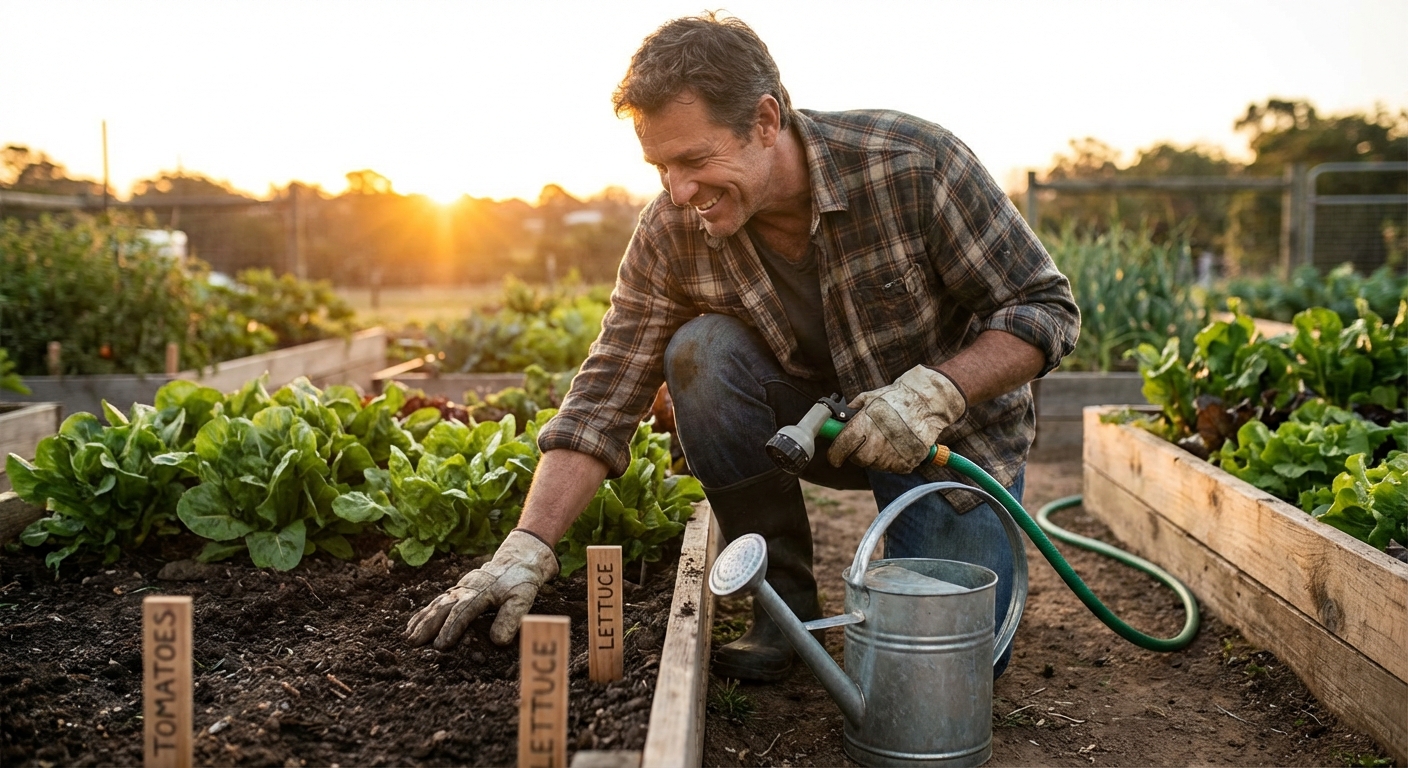
Most garden successes—and failures—come down to water. Too much, and roots suffocate. Too little, and plants wilt and struggle. The good news is that once you understand a few basics, watering becomes a confident, almost effortless habit.
Why Watering Matters More Than You Think
This guide will help you understand how water moves through soil and plants, how to adapt to your climate, and how to avoid the most common mistakes. We’ll finish with 5 practical tips you can use right away to keep your garden hydrated and happy.
Know Your Soil: The Foundation of Smart Watering
Soil type determines how quickly water drains and how long it sticks around. When you understand your soil, you know how much water to give and how often to water.
Three Main Soil Types
- Sandy soil
- Drains quickly
- Warms up fast in spring
- Needs more frequent watering
- Clay soil
- Holds water longer
- Can become waterlogged
- Needs less frequent but careful watering
- Loam (the sweet spot)
- Balanced drainage and moisture
- Ideal for most plants
To test your soil, grab a handful of moist soil and squeeze:
- Falls apart quickly? Likely sandy.
- Stays in a tight ball and feels sticky? Likely clay.
- Holds together but crumbles with a poke? Likely loam.
Adjust your watering habits based on which type you have.
How Plants Actually Use Water
It helps to know what water is doing inside your plants.
Plants use water to:
- Move nutrients from the soil to leaves, stems, and flowers
- Keep cells firm so plants stand upright
- Regulate temperature through evaporation from leaves (transpiration)
When soil dries out completely, roots can’t pull water or nutrients, and growth slows or stops. When soil stays saturated, roots can’t get enough oxygen and may rot.
Your goal isn’t to keep soil constantly wet—it’s to keep it consistently moist, with a chance to breathe between waterings.
Spotting Overwatering vs. Underwatering
It’s easy to confuse the two, so take a moment to check the soil before deciding.
Signs of Overwatering
- Yellowing leaves that feel soft
- Wilting even though the soil is wet
- Mold or algae on the soil surface
- Leaves dropping suddenly
Signs of Underwatering
- Leaves drooping but perk up after watering
- Dry, crumbly soil pulling away from the edges of pots
- Crispy leaf edges or browning tips
Whenever you see a problem, test the soil moisture 2–3 inches down with your finger or a moisture meter. Let that guide your next step.
Timing Is Everything: When to Water
The best time to water is when it helps plants most and reduces waste.
- Early morning is ideal.
- Plants absorb water before the heat of the day.
- Leaves dry quickly, reducing disease.
- Early evening is the second-best option.
- Water has time to soak in.
- Try to keep leaves dry so moisture doesn’t sit on foliage overnight.
Try to avoid watering in the middle of a hot, sunny day—more water evaporates before it reaches the roots.
Different Plants, Different Needs
Not all plants want the same amount of water.
- Drought-tolerant plants (lavender, sedum, Russian sage)
- Prefer drier conditions between waterings.
- Overwatering is more harmful than mild dryness.
- Moisture-loving plants (astilbe, ferns, hydrangeas in many climates)
- Prefer consistently moist—not soggy—soil.
- Vegetables and annual flowers
- Have shallow roots and grow quickly.
- Usually need regular, deep watering during hot, dry periods.
Check plant tags or do a quick search to understand each plant’s general preference, then group plants with similar needs together.
Tools That Make Watering Easier
You don’t need an elaborate system to water well, but the right tools help:
- Soaker hoses: Great for garden beds. Water seeps slowly at ground level.
- Drip irrigation: Efficient and customizable for pots, borders, and vegetable beds.
- Watering wands: Gentle for containers and hanging baskets.
- Mulch: Not a tool exactly, but essential for keeping moisture where plants need it.
Whatever method you choose, aim for slow, steady watering so moisture has time to soak down to the roots.
5 Helpful Tips for Water-Wise, Gorgeous Gardens
1. Water the Roots, Not the Leaves
When you water the foliage, most of the moisture never reaches the roots—and wet leaves can invite disease.
Direct your hose or watering can at the base of the plant, allowing water to soak into the soil around the root zone.
2. Use Mulch to Cut Your Watering in Half
A 2–3 inch layer of organic mulch (bark, shredded leaves, straw) around your plants:
- Slows evaporation
- Keeps soil cooler in summer and warmer in winter
- Reduces crusting on the soil surface
Keep mulch a few inches away from stems and trunks to prevent rot.
3. Water Deeply, Then Wait
Shallow, daily sprinkling encourages weak, surface roots.
Instead:
- Water until moisture reaches 6–8 inches deep.
- Then wait until the top inch feels dry before watering again.
This encourages strong, deep root systems and makes plants more resilient in heat and drought.
4. Adjust for Weather and Season
Plants need different amounts of water at different times:
- Hot, windy days: Increase watering slightly—wind and heat pull moisture from soil and leaves.
- Cool, cloudy periods: Decrease watering; soil stays moist longer.
- Spring and fall: Plants usually need less than mid-summer.
Avoid following a rigid schedule. Let the weather – and the soil – guide you.
5. Check Containers More Often
Potted plants dry out faster than plants in the ground because they have less soil to draw from and more exposed surface.
For containers:
- Check daily in hot weather.
- Water thoroughly until you see water drain out the bottom.
- Empty saucers so roots don’t sit in standing water.
Consider using larger pots and adding a layer of mulch on top of the soil in each container to slow evaporation.
Building Confidence with Every Watering
Mastering watering is less about memorizing rules and more about paying attention. As you practice checking soil, observing your plants, and adjusting to the weather, you’ll develop an intuitive sense of what your garden needs.
You don’t have to get it perfect—just consistent and thoughtful. With a little watering wisdom and a lot of patience, your plants will reward you with fresh growth, vibrant color, and that deeply satisfying feeling that comes from tending something living and watching it thrive.