
A small garden, balcony, or courtyard can feel limiting—but in design terms, it’s a gift. Compact spaces are easier to shape, quicker to transform, and often more affordable to plant.
Making the Most of Every Meter
The key is to think like a designer: every choice works a little harder, and every corner has a purpose.
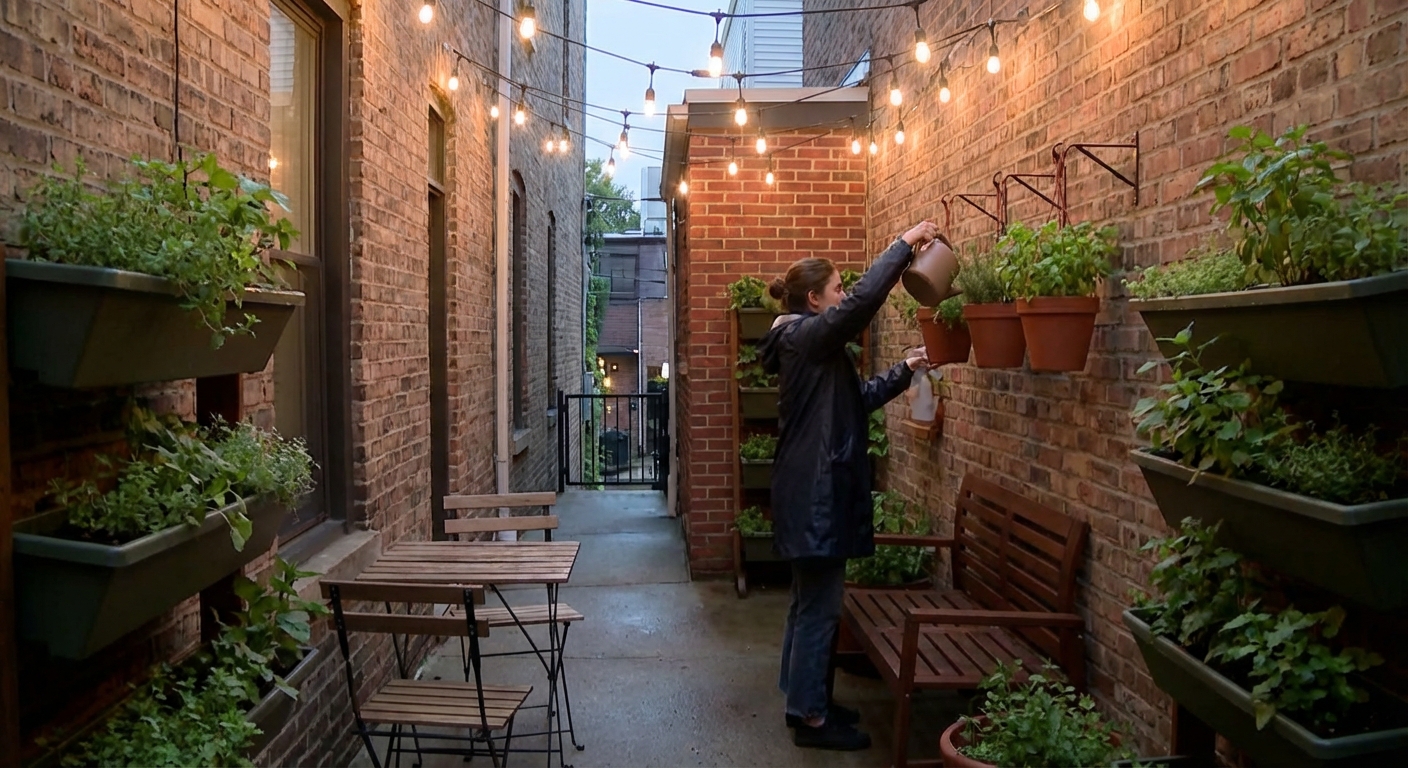
Think Vertical: Use Your Walls, Fences, and Air Space
When floor space is tight, go up.
Climbing Plants
Cover bare walls and fences with climbers suited to your light:
- Sunny: clematis, climbing roses, jasmine, honeysuckle
- Shady: climbing hydrangea, ivy (managed), evergreen honeysuckle
They add greenery and flowers without stealing ground room.
Shelves, Trellises, and Hanging Planters
- Fix narrow shelves to walls for pots of herbs and small perennials
- Attach trellis panels for climbers and to support lightweight hanging planters
- Use ceiling hooks or pergola beams for hanging baskets
Vertical elements pull the eye upward, making your garden feel taller and more immersive.
Choose a Strong Focal Point
A small space benefits enormously from one clear star feature.
Ideas include:
- A statement pot or urn
- A small tree in a container
- A water bowl or mini fountain
- A weatherproof sculpture
Place your focal point where your eye naturally lands from indoors or as you step outside. Arrange seating and planting to support that moment of "wow."
Keep the Floor Plan Simple
In compact spaces, complicated layouts feel busy fast. Aim for:
- One main surface (paving, decking, or gravel) rather than many different materials
- Gentle curves or simple straight lines—not lots of tiny zigzags
- Furniture with clear boundaries so you can move easily
If you want a small lawn, keep it a simple rectangle or circle. Tiny, awkward grass strips are hard to mow and rarely worth the effort.
Choose Multi-Tasking Plants and Features
Every element should ideally do more than one job.
- A small tree can give shade, flowers, fruit, and privacy.
- A bench with storage hides tools and cushions.
- An herb planter near the door offers fragrance, flavor, and greenery.
Look for plants that:
- Flower for a long period
- Have good foliage outside their flowering time
- Offer structure in winter
Examples: grasses, lavender, heuchera, dwarf conifers, compact hydrangeas, and long-blooming perennials like Salvia ‘Caradonna’ or geranium ‘Rozanne’.
Use Color and Light to Create Space
Color and light placement can visually "stretch" your garden.
- Light colors (pale paving, white or pastel flowers) reflect light and make areas feel more spacious.
- Darker fences or walls recede visually, making boundaries feel further away.
- Mirrors (used carefully and safely) can double a view; avoid placing where birds may fly into them.
Repeating just a few colors in pots, cushions, and flowers gives a calm, cohesive feel.
Create Hidden Corners and Borrowed Views
Even the smallest garden can feel like a tiny adventure.
- Tuck a chair behind a tall planter or grass so it feels like a secret nook.
- Angle furniture so you look toward your best view—a neighbor’s tree, a distant skyline, or your own focal point.
- Use gaps in planting or trellis to "borrow" greenery from surrounding gardens.
When there’s a sense of discovery, the garden feels larger than it is.
Container Design for Small Gardens
Containers are your best friends in compact spaces. To avoid a cluttered feel:
- Choose a consistent style or color for pots (e.g., all terracotta, or all charcoal gray)
- Use a few large pots rather than many tiny ones
- Group containers in threes for more impact
Plant combinations in pots just as you would a border:
- A thriller (taller focal plant)
- A filler (mid-height plant to bulk out)
- A spiller (trailing plant over the edges)
Refresh just a few pots seasonally, leaving the rest planted with long-term structural plants.
5 Helpful Tips for Designing and Maintaining a Small but Beautiful Garden
Tip 1: Edit Ruthlessly
Clutter is the enemy of small spaces. Periodically remove or relocate:
- Extra chairs you never use
- Weak or underperforming plants
- Random ornaments that don’t add joy
Give the plants and pieces you love room to breathe.
Tip 2: Choose Foldable or Built-In Furniture
Use café tables, folding chairs, or benches built against a wall. This keeps floor space flexible and reduces the feeling of crowding.
Tip 3: Prioritize Evergreen Structure
In a small garden, a few bare or straggly months are very noticeable. Incorporate:
- Evergreen shrubs
- Grasses that look good in winter
- Climbers with year-round foliage
They keep the space visually alive even when flowers are resting.
Tip 4: Water Wisely
Containers and small raised beds dry out quickly.
- Use larger pots wherever possible
- Add water-retaining granules or compost to potting mix
- Consider simple drip irrigation or self-watering containers
Grouping pots together also helps them create a more humid microclimate.
Tip 5: Plan Lighting for Evening Magic
A small space glows with just a few lights:
- String lights along a fence or pergola
- A solar lantern on the table
- A spotlight on your focal plant or feature
With thoughtful lighting, your little garden becomes a nighttime room, not just a daytime view.
Your Compact Garden as a Jewel Box
Think of your small garden as a jewel box: carefully curated, full of personality, and designed so every detail counts. Start with one focus area—perhaps a corner seating nook with vertical planting and a statement pot—and let the rest of the space evolve around it. With a few smart design tricks, even the tiniest plot can feel special, generous, and deeply welcoming.