
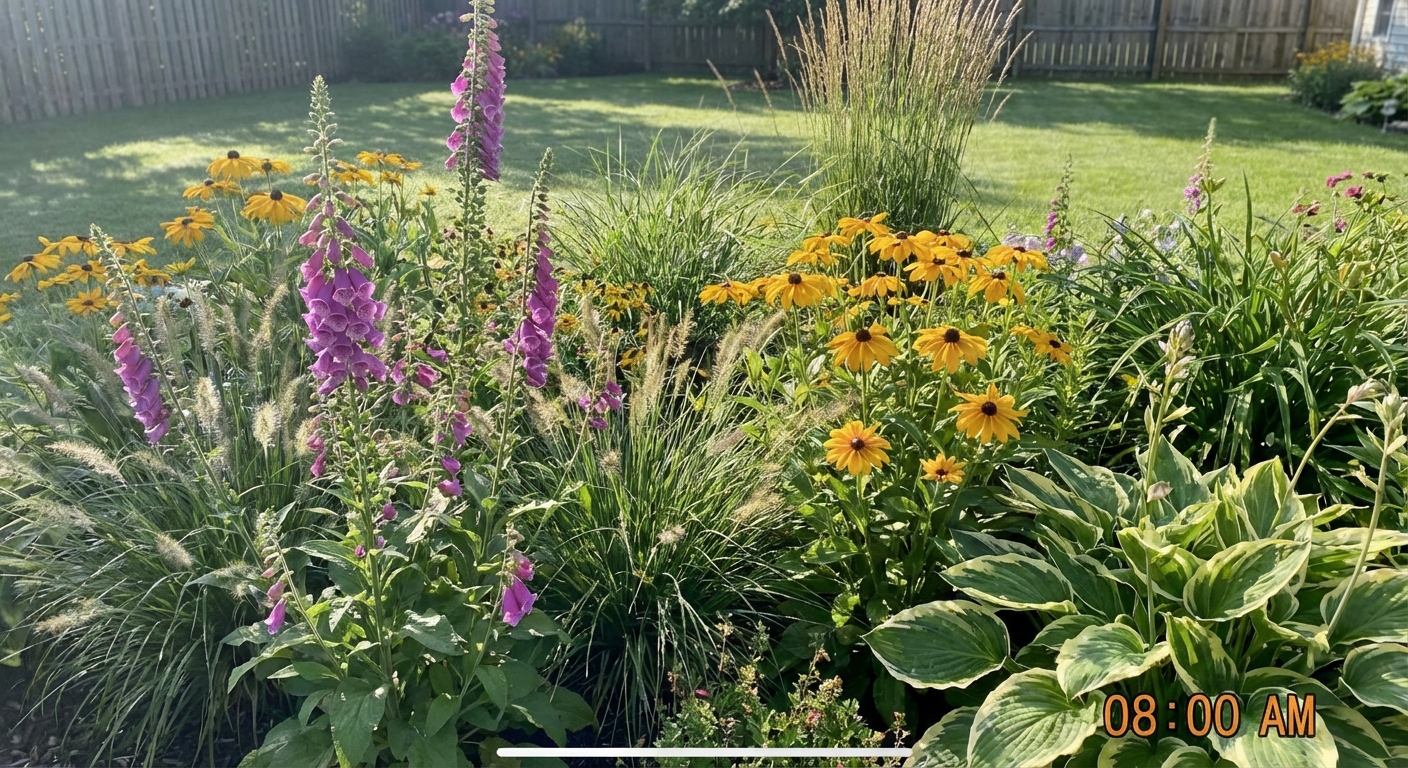
Garden design isn’t only about where things go—it’s about how plants look together. When you learn to play with color, shape, and texture, your borders start to feel intentional and beautifully put-together, like a well-styled room.
Designing with Plants Like a Stylist
You don’t need a design degree to do this. A few simple principles will help you combine plants in ways that feel calm, rich, and visually exciting.
Step 1: Choose Your Garden’s Mood with Color
Color sets the emotional tone of your garden.
Cool and Calm
Use blues, purples, whites, and soft pinks for a soothing vibe.
- Great for relaxation corners and evening seating areas
- Pairs well with silvery foliage (lavender, artemisia, lamb’s ear)
Warm and Cheerful
Yellows, oranges, reds, and bright pinks create energy and joy.
- Lovely near patios, doors, and play areas
- Stand out in full sun and from a distance
Soft and Natural
Muted tones—dusky pinks, creams, soft apricots, gentle blues—feel like a meadow.
- Ideal for cottage or wildlife gardens
- Blend harmoniously without shouting
Pick one main mood for each area. You don’t have to be strict, but a direction helps avoid visual clutter.
Step 2: Play with Shape for Visual Interest
Plants have different shapes (often called "forms"). Mixing them makes a border much more interesting.
Common Plant Shapes
- Spikes: tall and narrow, like salvia, lupins, foxgloves
- Mounds: rounded, like geraniums, heucheras, many shrubs
- Umbrellas: flat-topped flowers, like yarrow, sedums, achillea
- Swaying plumes: ornamental grasses, airy flowers like gaura
- Ground-huggers: low, spreading plants like creeping thyme
A simple formula for one area:
- Choose 1–2 spiky plants for height and drama
- Add 3–5 mounding plants as the backbone
- Weave in grasses or airy plants for movement
If your bed looks dull, you probably need more contrast in shape.
Step 3: Use Texture to Make the Garden Feel Full
Texture is about how plants’ leaves and flowers look and feel.
- Fine texture: small, delicate leaves and flowers (ferns, grasses, thyme)
- Bold texture: big, broad leaves (hostas, hydrangeas, gunnera)
Mixing fine and bold textures creates depth, even with a simple color palette.
Try this combo in part shade:
- Bold: hosta with large, lush leaves
- Medium: astilbe with plume-like flowers
- Fine: Japanese forest grass or ferns at the front
Even all-green planting can be beautiful when textures vary.
Step 4: Repeat Plants for Harmony
One of the easiest design secrets: repeat plants. Instead of buying one of everything, buy several of the same plant and place them throughout the bed.
Benefits of repetition:
- Makes the border feel calm and unified
- Leads the eye through the garden
- Simplifies maintenance (you learn the needs of a few reliable plants)
Place your repeated plants at intervals, like beats in music. They become visual anchors.
Step 5: Think in Layers—Back, Middle, Front
Layering is key to a full, rich border.
- Back (tall layer): 90 cm+ (3+ ft) – shrubs, tall perennials, grasses
- Middle layer: 45–90 cm (1.5–3 ft) – most perennials and flowering plants
- Front layer: 15–45 cm (6–18 in) – edging plants, herbs, small groundcovers
Stagger heights slightly rather than making a strict step. Let a tall grass peek forward or a groundcover weave backward. This gives a natural, flowing look.
Practical Plant Combination Examples
Here are a few easy, tried-and-true recipes you can adapt.
Sunny, Low-Maintenance Border (Calm Palette)
- Tall: Russian sage (Perovskia), ornamental grasses (Stipa, Miscanthus)
- Middle: Lavender, catmint (Nepeta), hardy geraniums
- Front: Lamb’s ear, thyme, low-growing sedums
Color: silvers, blues, purples, soft mauves.
Cheerful Pollinator Patch
- Tall: Coneflower (Echinacea), rudbeckia, verbena bonariensis
- Middle: Salvia, coreopsis, yarrow
- Front: Low marigolds, creeping thyme, dwarf asters
Color: bright yellows, pinks, purples.
Shady Corner with Lush Foliage
- Tall: Hydrangeas, tall ferns
- Middle: Heucheras, astilbes, brunnera
- Front: Hostas (smaller varieties), lungwort (Pulmonaria), ivy (controlled)
Color: greens, silvers, and soft blooms.
5 Helpful Tips for Creating and Maintaining Beautiful Plant Combinations
Tip 1: Shop with a Photo or Palette in Mind
Before visiting the nursery, gather a few inspiration photos or decide on 2–3 main colors. Use these as a filter so you’re less tempted by impulse buys that don’t fit.
Tip 2: Buy in Threes or Fives
Whenever possible, buy at least 3 of the same plant (or 5 for smaller ones) and plant them in groups or drifts. One lonely plant usually looks like an accident; groups look intentional.
Tip 3: Allow Breathing Space
Don’t pack plants too tightly. Check mature sizes and leave enough room for them to grow together gently over time. Overcrowded beds need constant editing and can struggle with pests and disease.
Tip 4: Edit Once or Twice a Year
In spring and late summer, take a hard look at each bed:
- Which colors clash more than you like?
- Which plants are too big or too small for their spot?
- Where does the border feel flat or messy?
Move, divide, or remove just a few things. Garden design is often more about editing than adding.
Tip 5: Let Some Plants Self-Seed (Selectively)
Many lovely plants (like foxgloves, poppies, and verbena bonariensis) self-seed. Let a few babies grow where they land, then remove extras. This creates a natural, slightly wild look without losing control.
Your Garden, Your Style
There are no strict right or wrong combinations—only what delights you. Start small: design one border, one corner, or even a single large pot using these ideas. As you gain confidence, you’ll start to see your whole garden as a canvas, and styling plants will feel playful instead of daunting.