
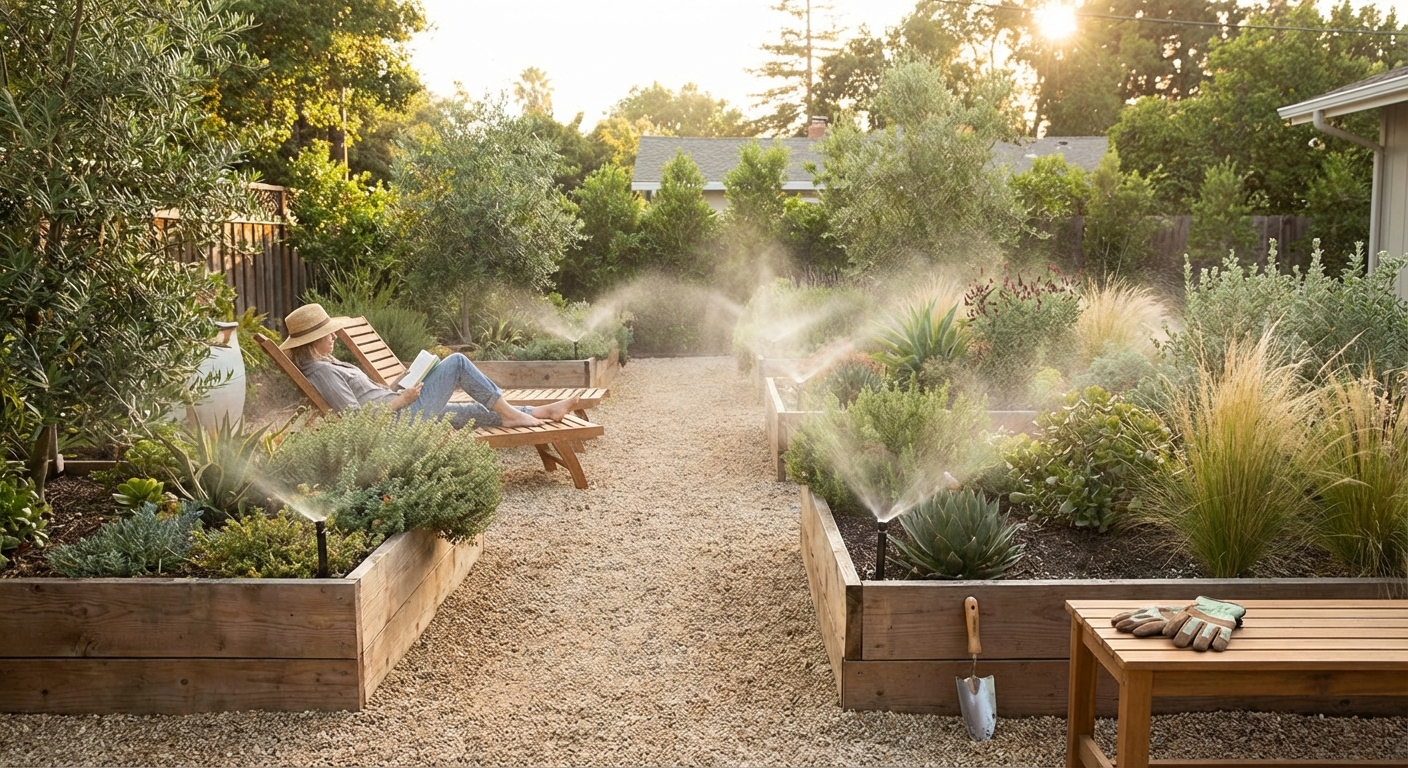
If you love the idea of a gorgeous garden but not the idea of endless chores, you’re not alone. The good news: you can design from the start for less maintenance.
Beauty Without the Constant To-Do List
Low-maintenance doesn’t mean dull. It means smarter choices so your garden works with you, not against you.
Step 1: Be Honest About Your Time and Energy
Before you plan, decide realistically:
- How many hours a week can you spend in the garden?
- Do you enjoy pottering, or do you prefer quick, focused bursts?
- Are holidays away common (plants must cope without you)?
Design for the life you actually live, not the fantasy “I’ll totally weed every day” version.
Step 2: Choose Simple Structures and Surfaces
Big, structural decisions greatly affect maintenance.
Fewer Edges, Fewer Headaches
Every edge—between lawn and bed, gravel and paving—is a line you’ll need to maintain. So:
- Opt for sweeping, simple shapes instead of lots of small curves and fiddly lines
- Use mowers’ strips (brick or stone edging) along lawns so you can mow cleanly
Smart Surface Choices
- Quality paving: Swept occasionally, it stays neat for years.
- Gravel: Works well with a membrane beneath; some weeding still needed.
- Lawn: Easy if it’s a simple shape; time-consuming if small and choppy.
In some areas, replacing small awkward lawn patches with planting or gravel seating can actually reduce work.
Step 3: Pick Tough, Reliable Plants
Low-maintenance design is mostly about plant choice.
Look for plants described as:
- Drought-tolerant
- Disease-resistant
- Long-flowering
- Suitable for your light and soil conditions
Great Low-Maintenance Candidates (Sunny Spots)
- Ornamental grasses (Stipa, Miscanthus, Pennisetum)
- Lavender and rosemary
- Catmint (Nepeta)
- Hardy geraniums
- Sedums and other succulents
For Part Shade to Shade
- Hostas (if slugs aren’t a major issue or you can mulch/grit around them)
- Ferns
- Heucheras
- Astilbe
- Evergreen shrubs like box, laurel, or small rhododendrons (suited to your soil)
Favor shrubs and perennials over bedding plants. Bedding needs replacing every season; shrubs and perennials get better with age.
Step 4: Plant in Big Groups and Fill the Ground
Bare soil is like an open invitation to weeds. A low-maintenance garden covers the ground quickly.
- Plant in drifts or blocks: 3–7 of the same plant together.
- Add groundcovers like creeping thyme, vinca, or small geraniums.
- Use mulch (bark, compost, gravel) between plants until they meet.
This reduces how much open soil you have to weed and water.
Step 5: Automate or Simplify Watering
Watering is one of the most time-consuming tasks. Design to minimize it.
- Group thirsty plants near a tap or water butt.
- Use drip irrigation or soaker hoses in main beds.
- Choose drought-tolerant plants for far corners.
In containers, choose larger pots—they dry out more slowly and need less attention.
Designing Low-Maintenance Garden Areas
Easy-Care Front Garden
Front gardens set the tone but often get neglected.
- Replace fiddly lawn strips with gravel or paving plus big pots
- Plant a mix of evergreen shrubs and long-flowering perennials
- Mulch heavily to keep weeds down
This gives you neatness and curb appeal without weekend marathons.
Relaxed Back Garden
For a calm, low-effort back garden:
- One simple lawn or gravel area
- Deep, mulched borders with shrubs and grasses
- A single, comfortable seating space (not three tiny ones)
Add just a few high-impact features: a small tree, a birdbath, a cluster of lanterns. Simple and spacious often feels more luxurious than crammed and fussy.
5 Helpful Tips for Creating and Maintaining a Low-Maintenance Garden
Tip 1: Say No to High-Fuss Plants (Most of the Time)
Limit plants that demand constant deadheading, staking, or special care. You can keep one or two favorites in a prime spot, but let the rest of your planting be tough and straightforward.
Tip 2: Mulch Once, Enjoy for Months
Apply a 5–7 cm (2–3 inch) layer of organic mulch in spring:
- Suppresses most annual weeds
- Locks moisture in the soil
- Improves soil over time
Top up yearly where it thins. It’s one of the best returns on effort in the garden.
Tip 3: Use Evergreen Structure Generously
Evergreens mean there’s always something to look at, even when little is flowering. They reduce the urge to constantly add more plants just to fill gaps. Think small conifers, box balls, or tough shrubs.
Tip 4: Choose Quality Over Quantity in Containers
Instead of 15 tiny pots, go for 3–5 large ones with long-lasting plants:
- Dwarf shrubs
- Grasses
- Hardy perennials
Large pots hold more soil and stay moist longer, saving you time.
Tip 5: Plan a Simple Seasonal Routine
Break the year into three maintenance moments:
- Early spring: Cut back perennials and grasses, mulch beds
- Early summer: Quick weed, trim, and check supports for tall plants
- Autumn: Light tidy-up, plant bulbs, remove annuals
A few focused sessions each season keep things under control without dominating your free time.
A Garden That Fits Your Real Life
You don’t have to choose between a beautiful garden and your weekends. When you design with time, energy, and plant choice in mind, your garden becomes a place you enjoy being in rather than constantly working on. Start with one border or area, simplify it, and let that feeling of ease spread through the rest of your space.