
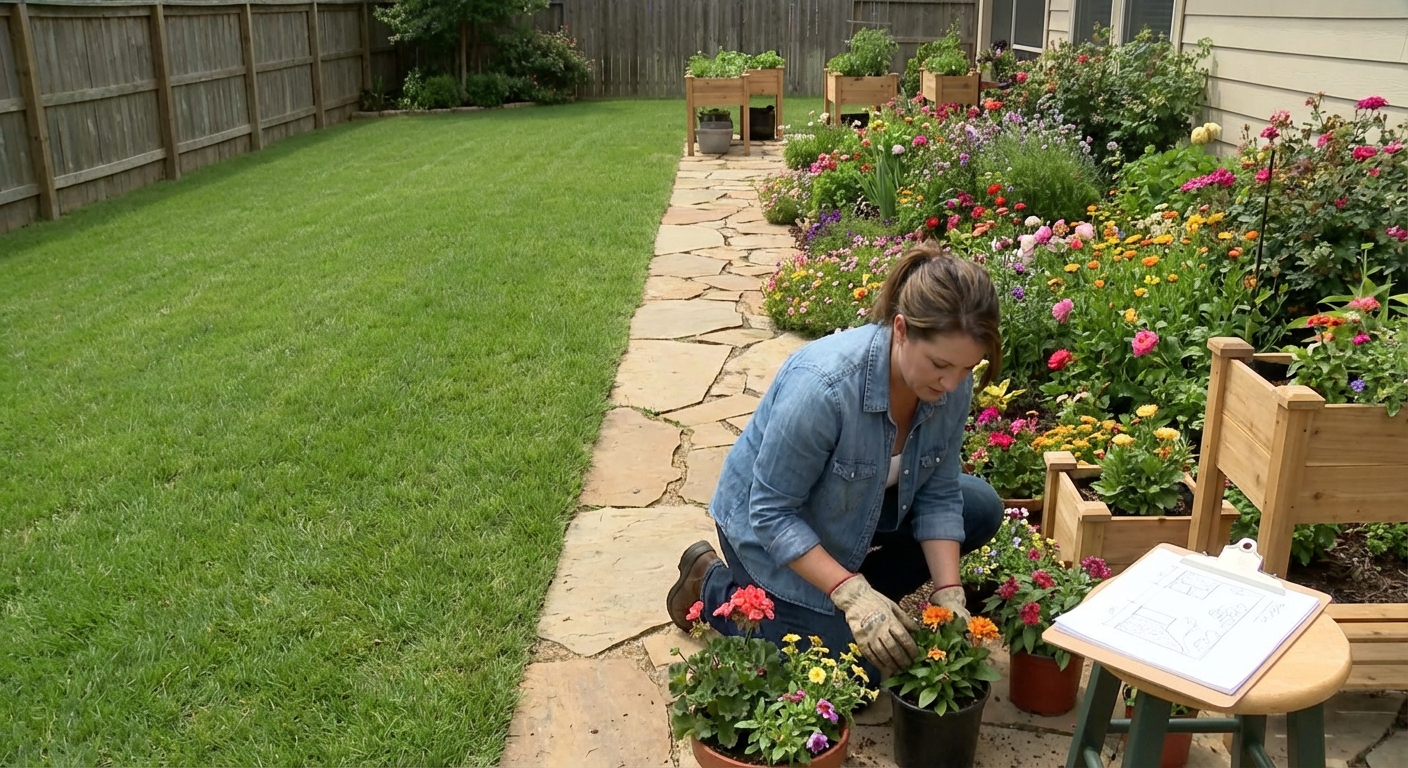
Starting with a blank yard (or a neglected one) can feel overwhelming, but garden design truly begins with noticing how you want to live outdoors. Before you buy a single plant, take a slow walk around your space.
Dreaming Up Your Garden
Ask yourself:
- Where do I naturally want to sit?
- Which views do I love, and which do I want to hide?
- When does the sun hit different parts of the garden?
- Do I want a quiet retreat, a family space, or a wildlife haven?
Write down a few words that describe how you want the garden to feel: calm, playful, lush, minimal, wild, tidy. Those words will guide every design decision you make.
Getting to Know Your Garden’s Personality
Every garden has a personality: soil type, light levels, wind, and even the way water drains all shape what will thrive.
Observe Light and Shade
Spend a day paying attention to sunlight:
- Morning: Which areas get soft, gentle sun?
- Midday: Where is it hottest and brightest?
- Evening: Which spots stay light longest?
Mark areas as full sun (6+ hours), part shade, or full shade. This will prevent one of the most common beginner mistakes: putting a shade lover in blazing sun or a sun lover in a dark corner.
Check Your Soil
Healthy plants start with healthy soil.
- Grab a handful and squeeze it.
- If it forms a tight ball, you may have clay.
- If it crumbles and feels gritty, it’s sandier.
- If it holds together loosely, you’re closer to loam (ideal!).
- Work in compost or well-rotted manure to improve structure, whatever your starting point.
You don’t need perfect soil on day one. Think of soil as something you improve slowly over time.
Creating a Simple Layout That Works
You don’t need a complicated plan to have a beautiful garden. Focus on three basics: routes, rooms, and rhythm.
1. Routes: How You Move Through the Space
Decide how you’ll move around:
- A simple path from the house to a seating area
- A loop path for kids to run around
- Stepping stones to a secluded bench
Even a small garden benefits from a defined path. It invites you outside and protects soil and plants from being trampled.
2. Rooms: Little Outdoor Zones
Break your garden into 2–3 zones, such as:
- Dining area near the house
- Relaxation corner with a bench or hammock
- Productive patch for herbs and veggies
You can lightly “separate” these with:
- Low shrubs or planters
- A small arch or pergola
- Changes in ground surface (gravel vs. grass)
3. Rhythm: Repeating Shapes and Plants
Repeating just a few elements instantly makes your garden feel planned and peaceful:
- Use the same terracotta pots in 3 different spots
- Repeat one or two key plants along a border
- Stick to 2–3 main accent colors for flowers
Repetition creates a relaxed, cohesive feel—even if you’re still learning.
Choosing Plants Without Overthinking It
When you start buying plants, it’s easy to get carried away. Instead, use a simple framework:
Start with Structure
Begin with "bones" of the garden:
- Evergreens (boxwood, holly, yew, dwarf conifers)
- Small trees or large shrubs
Place these where you want year-round interest and privacy—corners, along fences, or near seating areas.
Add Layers
Think in three layers:
Tall layer: shrubs, grasses, small trees
Middle layer: perennials like coneflower, salvia, lavender
Front layer: groundcovers, low edging plants, herbs
This layered approach creates depth and makes borders look full and generous, not flat.
Pick a Simple Color Palette
Choose one of these easy palettes:
- Calm: whites, soft pinks, blues, and silvers
- Cheerful: yellows, oranges, bright pinks
- Moody: deep purples, burgundies, dark greens
You don’t have to be strict, but having a general palette prevents a chaotic look.
5 Helpful Tips for Creating and Maintaining a Beautiful Garden
Tip 1: Start Small and Finish One Area at a Time
Instead of tackling the whole garden, choose one “feature area”: a front border, a patio corner, or a gateway bed. Fully finish that area—soil, plants, mulch, maybe a simple decoration. The sense of completion is motivating and teaches you what works before you scale up.
Tip 2: Use Mulch as Your Secret Weapon
Mulch (bark, compost, or gravel) makes a huge difference:
- Suppresses weeds
- Helps soil retain moisture
- Instantly makes beds look tidy and intentional
Spread 5–7 cm (2–3 inches) around plants, keeping it just away from stems.
Tip 3: Group Plants by Water Needs
Put thirsty plants together and drought-tolerant ones together. This way:
- You waste less water
- You avoid over- or under-watering certain plants
For example, keep lavender, rosemary, and ornamental grasses in the same low-water bed, and plant hydrangeas, hostas, and astilbes where they’ll get more moisture.
Tip 4: Plan for Year-Round Interest
Don’t let your garden only shine for two weeks in June. Choose:
- Spring: bulbs (tulips, daffodils), early perennials
- Summer: long-flowering perennials (salvia, geraniums)
- Autumn: grasses, late bloomers (asters, sedums)
- Winter: evergreens and plants with interesting bark or seed heads
Mixing these ensures something is always happening.
Tip 5: Set a “Garden Hour” Each Week
Instead of waiting until things feel out of control, schedule a regular, short session:
- 30–60 minutes once a week
- Quickly weed, deadhead spent blooms, and check for pests
- Water newly planted areas if needed
Regular, small efforts are far easier than occasional marathons.
Enjoying the Process, Not Just the Result
Garden design is an ongoing relationship with your space, not a one-time project. Plants move, grow, and sometimes fail. That’s all part of the learning.
Change your mind. Move a plant that isn’t happy. Try a new color next year. As you experiment, your garden will slowly transform into a place that truly feels like you—and that’s the most successful design of all.