
Whether you’re starting with a patchy lawn or a wild jungle, thoughtful garden design turns "some plants" into "a place I love to be."
This guide walks you through the basics—no fancy jargon, no design degree required—just simple, practical steps to shape a garden that fits your life.
Start With How You Want to Use Your Garden
Before you buy a single plant, decide what you want your garden to do for you.
Ask yourself:
- Do I want a quiet reading nook?
- A play space for kids or pets?
- A space to entertain friends?
- A productive kitchen garden for herbs and vegetables?
- A low‑maintenance space that mostly looks after itself?
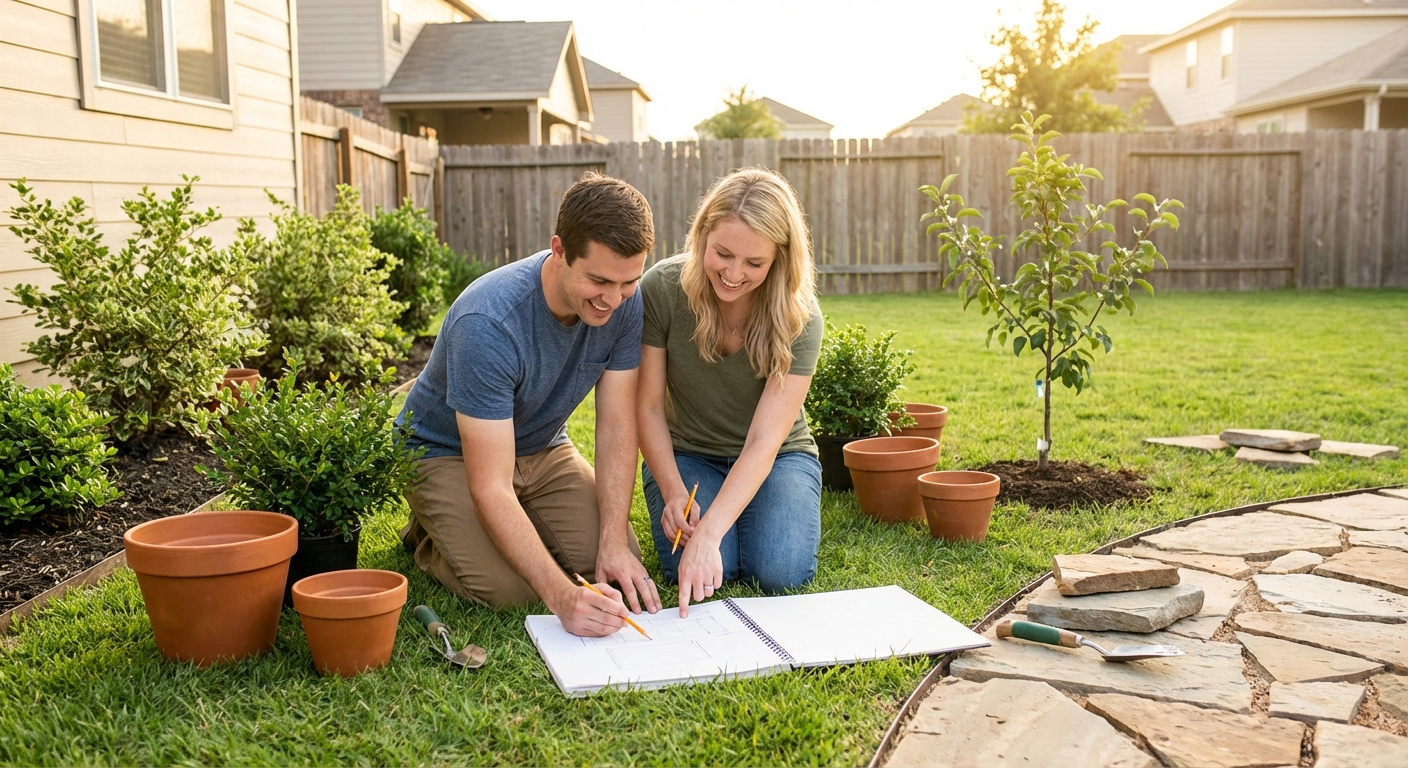
Draw a rough sketch of your yard (stick figures and wobbly lines are fine) and label broad areas:
- Sitting / entertaining area
- Pathways
- Sunny planting beds
- Shady corners
- Utility zones (bins, compost, shed)
This simple map will keep you focused while you choose plants and features.
Think in Layers, Not Individual Plants
Great gardens feel lush and balanced because they’re built in layers, not as a random collection of pots.
The three main layers
- Canopy layer – Trees or tall shrubs that create structure and shade.
- Middle layer – Medium shrubs and perennials that fill most of the space.
- Ground layer – Low growers, groundcovers, and edging plants that soften the edges.
Aim to include all three, even in a small garden. For example:
- A small ornamental tree or tall shrub near the back.
- Flowering perennials and grasses in the middle.
- Creeping thyme, sweet alyssum, or low sedums along the front and between pavers.
This layering naturally creates depth and interest, and it helps reduce visible bare soil (which weeds love).
Use Shape and Repetition to Create Calm
When gardeners feel their space looks “messy” but can’t say why, it’s often a design issue, not a plant issue.
Two easy design tools:
1. Repeat, repeat, repeat
Instead of buying one of everything, choose a few favorites and repeat them:
- Plant the same lavender along both sides of a path.
- Repeat a clump of ornamental grass in three or five spots.
- Use one type of groundcover to link different beds.
Repetition helps your eye move smoothly around the garden, making it feel intentional and restful.
2. Curves or straight lines—pick a style and be consistent
- Curved beds and paths feel soft and relaxed.
- Straight lines and sharp angles feel modern and tidy.
You don’t have to pick one forever, but try not to mix too many shapes at once. For example, if you choose curved borders, avoid adding lots of zigzagging edges.
Color: Start Simple, Then Add Drama
When you’re standing in the nursery surrounded by blooms, it’s easy to forget any plan you had. Keep it simple to start.
Choose a basic color palette
A classic beginner‑friendly combo:
- Green + white + one accent color (like purple, pink, or yellow)
This works almost anywhere, feels calm, and is easy to tweak later. Once your base is established, you can sprinkle in a few surprises—like fiery orange or deep red—for seasonal drama.
Think beyond flowers
Lasting gardens rely on more than just blooms:
- Foliage color: silvery, dark, variegated, or bright green.
- Texture: feathery grasses vs. bold hosta leaves.
- Structure: evergreen shrubs that look good year‑round.
This keeps your garden interesting even between flowering seasons.
Design With Maintenance in Mind
The most beautiful garden is the one you still enjoy after the novelty wears off. Design choices can make it much easier to maintain.
Group plants by water and light needs
Put thirsty plants together, and drought‑tolerant ones together. Don’t mix sun‑lovers and shade‑lovers in the same bed.
This way:
- Watering is simpler and more efficient.
- Plants are healthier and less fussy.
Mulch is your best friend
A 5–7 cm (2–3 inch) layer of organic mulch:
- Suppresses weeds
- Helps soil retain moisture
- Protects plant roots from temperature swings
- Slowly improves soil as it breaks down
Leave a small gap around plant stems to prevent rot.
Five Helpful Tips for Creating and Maintaining a Beautiful Garden
1. Start small and finish one area at a time
Instead of tackling the entire yard, pick one manageable space—like a front entry bed or a small patio border. Complete it, enjoy it, and learn from it before moving on.
2. Choose plants that suit your climate and soil
Check your local climate zone and observe your yard’s conditions: wind, sun, and moisture. Native and well‑adapted plants are usually easier, tougher, and more eco‑friendly. A 10‑minute chat at a good local nursery can save you years of frustration.
3. Create clear edges for instant polish
Neat edges make even a young garden look intentional. Use:
- A spade‑cut edge between lawn and beds
- Brick, stone, or metal edging
- A low hedge or row of groundcovers
Re‑cutting or tidying edges a few times a year gives huge visual payoff for minimal effort.
4. Plant more densely to outcompete weeds
Bare soil invites weeds. Plant a little closer than the tag suggests (within reason) and use groundcovers to fill gaps. As plants mature, they’ll shade out weed seedlings and reduce your weeding workload.
5. Schedule quick, regular garden check‑ins
Set a weekly 15–20 minute “garden date”:
- Pull small weeds before they spread
- Check for pests or diseases
- Deadhead spent flowers
- Note any plants that need moving or extra water
These tiny, consistent sessions prevent big problems and keep the garden feeling like a joy, not a chore.
Let Your Garden Evolve
No garden is “finished”—and that’s part of the fun. Plants grow, your taste changes, and life seasons shift. Allow yourself to:
- Move plants that aren’t happy
- Replace anything that constantly struggles
- Try new combinations each year
Start with how you want your space to feel, add thoughtful layers, keep maintenance realistic, and your garden will gradually become that welcoming haven you imagined—one small, satisfying step at a time.