
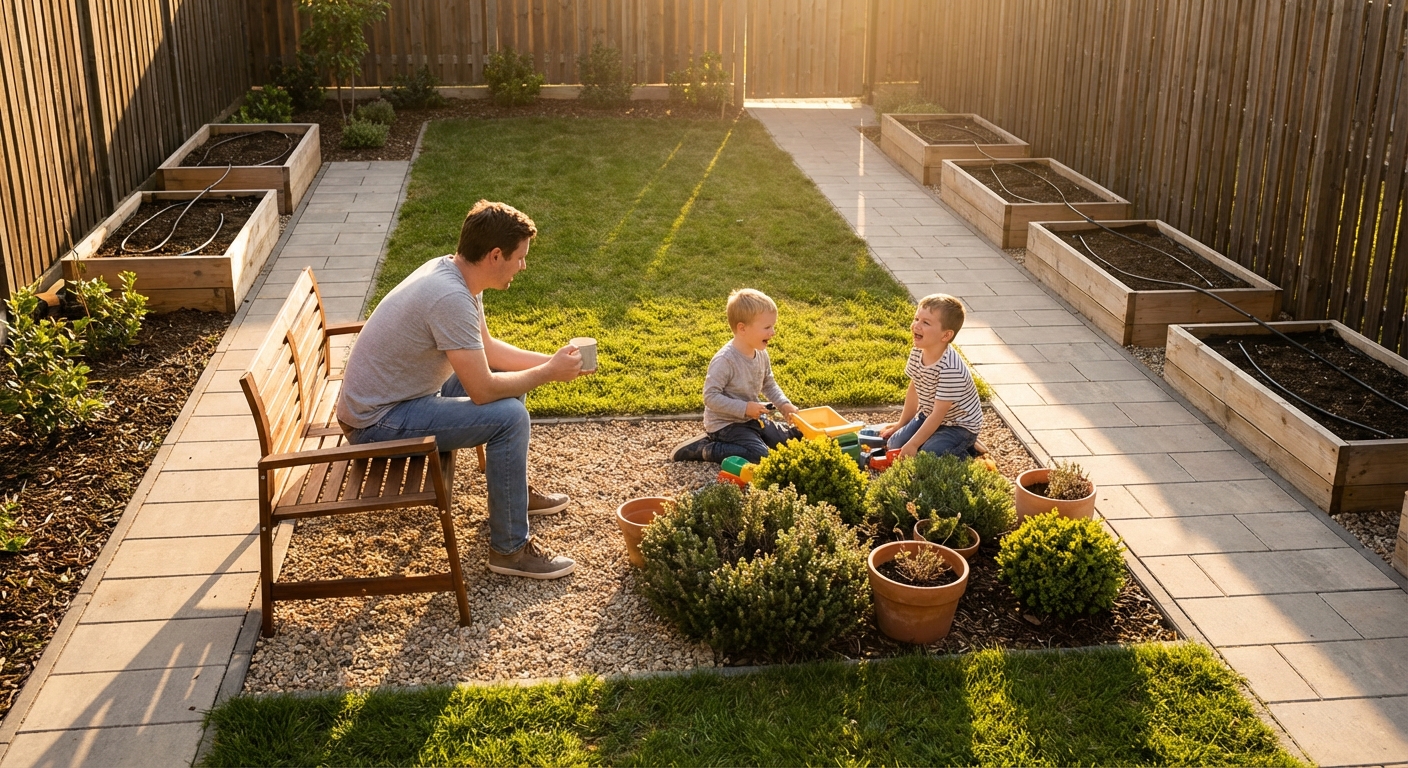
You don’t need endless free time or perfect gardening skills to enjoy a beautiful outdoor space. With a bit of smart design, your garden can look good and fit a busy schedule.
This guide focuses on practical layouts and choices that reduce work, not beauty.
Step 1: Map the Sun, Shade, and Traffic
Before you change anything, observe your garden for a few days.
Where does the sun fall?
Note which areas are:
- Full sun (6+ hours of direct light)
- Part shade (3–5 hours or dappled light)
- Full shade (very little direct sun)
Draw these roughly on a simple sketch. Sun patterns guide where you’ll put seating, veg beds, and flowering plants.
Where do people actually walk?
Notice the natural paths you and your family already take:
- To the bin or compost
- From house to shed or garage
- To the clothesline or seating area
Instead of fighting these “desire lines,” turn them into intentional paths with stepping stones, gravel, or pavers. This reduces worn patches on the lawn and keeps beds from being trampled.
Step 2: Divide Your Garden Into Easy‑Care Zones
Breaking the garden into a few simple zones helps you design with maintenance in mind.
Example layout for a small to medium garden:
Entrance / Welcome Zone
Near your front door or main entry. Focus on strong structure, evergreen plants, and a tidy path.
Relaxation Zone
A small patio, deck, or seating nook. Surround it with low‑maintenance, long‑season plants.
Productive Zone
Raised beds or containers for herbs, salad greens, or a few favorite vegetables, close to the kitchen.
Utility Zone
A tucked‑away corner for bins, compost, and storage, screened with tall plants or a simple trellis.
Design each zone with a clear purpose and make the routes between them obvious and comfortable.
Step 3: Choose Structures That Do the Heavy Lifting
Hardscaping—paths, patios, raised beds, fences—sets the bones of the garden and can save you time long‑term.
Smart path ideas for low maintenance
- Use gravel, brick, or pavers instead of narrow stepping stones set in lawn.
- Make paths wide enough (at least 80–100 cm / 32–40 in) so you’re not brushing against plants.
- Add a solid, weed‑suppressing base (landscape fabric plus compacted gravel) under loose materials.
Seating that actually gets used
Place benches or chairs where they catch morning or late‑day sun, not the harsh midday glare. Try:
- A bench under a small tree
- A bistro set near the kitchen door
- A single comfortable chair in a quiet corner
If you like to read or have coffee outside, design with that habit in mind.
Step 4: Plant for Longevity, Not Constant Fuss
Busy gardeners do best with perennials, shrubs, and small trees that come back year after year, instead of high‑maintenance annual bedding.
Focus on these plant traits
- Drought‑tolerant once established
- Pest and disease resistant in your area
- Long flowering period or attractive foliage for much of the year
- Right size at maturity so you’re not constantly pruning
Use annuals (like petunias or marigolds) only as accents—containers by the door, for example—where you’ll really enjoy them.
Layer for all‑season interest
Combine:
- Evergreens for structure (boxwood, yew, rosemary, dwarf conifers)
- Flowering shrubs for seasonal color (hydrangea, spirea, weigela)
- Perennials for repeated blooms (salvia, echinacea, daylilies)
- Grasses or textural plants for movement and winter structure
This layering means something always looks good, even in quieter seasons.
Step 5: Reduce Chores With Smart Ground Choices
Your choice of ground surface can dramatically affect how much work the garden requires.
Rethink the size of your lawn
Lawns are pleasant, but they need regular mowing, edging, and feeding. Consider:
- Shrinking the lawn and expanding mixed borders.
- Replacing awkward, narrow strips of grass with gravel, groundcovers, or planting.
Groundcovers: living mulch
Low plants that spread gently can protect soil and reduce weeding:
- Creeping thyme
- Ajuga
- Low sedums
- Sweet woodruff
They’re especially useful between stepping stones or under taller shrubs.
Five Helpful Tips for a Beautiful, Low‑Stress Garden
1. Put high‑need plants where you see them daily
Herb pots, salad greens, or containers that need frequent watering should live near the back door or a path you use often. If you have to trek to the far corner of the garden, they’ll be neglected.
2. Install simple irrigation where it matters
Soaker hoses, drip lines, or even a basic timer on a hose can transform summer watering into a quick check rather than a nightly chore. Prioritize beds with the thirstiest plants.
3. Use mulch generously and renew it yearly
Mulch suppresses weeds, buffers soil temperature, and locks in moisture. Top up once a year in spring or autumn, keeping it away from trunks and stems.
4. Choose a seasonal “spruce‑up” routine
Pick two main garden weekends each year (for example, early spring and autumn). Use them to:
- Cut back perennials
- Refresh mulch
- Move or divide overcrowded plants
- Check structures and repair paths
This keeps things under control without constant big projects.
5. Embrace imperfection and edit slowly
No garden is perfect, and that’s okay. If a plant doesn’t thrive, replace it with something tougher. Move one or two things at a time rather than ripping everything out. Gradual changes are easier to manage and often more successful.
Your Garden, Your Pace
A thoughtfully designed garden doesn’t demand your every weekend—it supports your lifestyle instead. By planning around how you move, what you enjoy, and how much time you realistically have, you can create a space that looks welcoming, grows steadily more beautiful, and never feels like another item on your to‑do list.
Start small, zone your space, choose resilient plants, and let your garden grow with you—quietly, steadily, and with far less stress.