
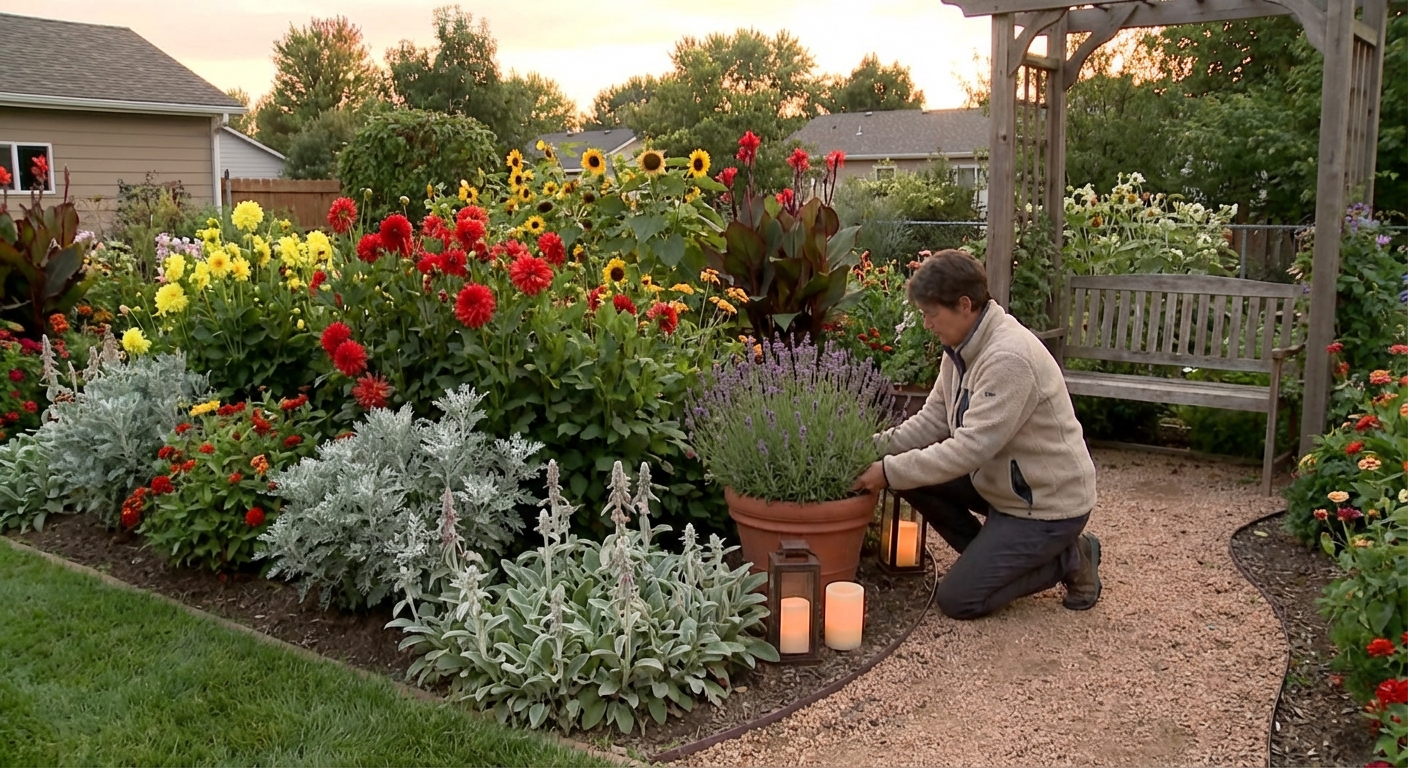
You don’t need a designer’s eye to make your garden feel pulled‑together and stylish. With a few simple principles—color, contrast, and calm—you can shape a space that looks intentional and inviting all year.
This guide breaks garden styling into easy, practical steps you can apply bit by bit.
Build Your Garden Around a Mood, Not Just Plants
Instead of starting with specific flowers, begin with how you want the garden to feel.
Some mood ideas:
- Calm retreat – soft colors, flowing shapes, plenty of green
- Joyful cottage – mixed colors, abundant flowers, charming details
- Modern minimal – clean lines, limited palette, bold shapes
- Wild and natural – grasses, native plants, soft transitions
Write down three words that capture your ideal mood (for example: calm, green, simple). Keep these as a filter for every choice you make.
Use Color Intentionally
Color is one of the quickest ways to change the character of your garden—but it’s also where many people feel overwhelmed. A simple framework helps.
Step 1: Pick your base colors
Base colors are the ones that appear most often and link the whole space.
- For calm gardens: greens, whites, and cool tones (blues, purples)
- For energizing gardens: warm tones (yellows, oranges, bright pinks)
Choose 1–2 base flower colors plus green foliage.
Step 2: Add one accent
An accent color is used sparingly to create moments of excitement. For example:
- A mostly purple‑and‑white border with flashes of orange
- A soft pink garden with pops of deep burgundy
Use the accent in:
- Pots and containers
- A few standout plants
- Accessories like cushions or a painted bench
Step 3: Repeat colors around the garden
To avoid a scattered look, repeat the same colors in several places:
- The purple of salvia echoed by an allium farther along the border
- The blue of catmint repeated in a container near the door
This repetition ties everything together visually.
Play With Contrast in Shape and Texture
Color isn’t the only way to create interest. Contrast in shape and texture gives gardens depth and complexity.
Contrast bold and fine textures
- Bold textures: large leaves (hosta, ligularia, bergenia), big, smooth foliage
- Fine textures: grasses, ferns, feathery foliage, tiny leaves
Pair them:
- A clump of ornamental grass next to broad hosta leaves
- Airy yarrow flowers above dense, shrubby foliage
These contrasts make each plant look better by comparison.
Mix plant shapes deliberately
Common plant shapes:
- Mounds – many perennials and small shrubs
- Spikes – salvias, lupins, foxgloves, irises
- Spills and trails – creeping thyme, bacopa, ivy
- Upright columns – columnar evergreens, tall grasses
Include a few of each in a bed. A simple combo:
- Mounded geraniums
- Spikes of salvia
- Trailing thyme along the edge
- An upright conifer or grass as a vertical accent
Create Calm With Clear Structure
Pretty flowers are wonderful, but structure is what makes a garden feel grounded and serene.
Lean on evergreen anchors
Evergreen shrubs and small trees provide year‑round backbone:
- Place them at corners of beds
- Use them to frame views or doors
- Repeat the same type to avoid visual clutter
A row of three or five matching evergreens can make a border look instantly more organized.
Use lines to guide the eye
Paths, edges, fences, and low hedges act like visual arrows. Use them to:
- Lead the eye toward a focal point (bench, birdbath, tree)
- Define the difference between lawn and beds
- Make the garden feel intentional even in winter
Clean lines don’t have to mean formality; even a softly curved border edge, repeated consistently, brings calm.
Style With Simple, Repeated Details
Small touches create character when they’re used consistently.
Choose a “signature” material or finish
Pick one or two materials and echo them:
- Terracotta pots in different sizes
- Black metal supports and lanterns
- Weathered wood planters and benches
Using the same materials ties the space together, even if the plants vary.
Add focal points thoughtfully
You don’t need a statue in every corner. One or two focal points are enough:
- A bench under an arching tree
- A large glazed pot at the end of a path
- A birdbath in the center of a small flower bed
Leave some quieter areas so the eye can rest.
Five Helpful Tips for Styling and Maintaining a Beautiful Garden
1. Edit once a season
Walk through with a critical but kind eye at least four times a year. Ask:
- Is anything too big or out of place?
- Do any colors clash with the mood I want?
- Where does my eye get “stuck” or confused?
Remove or move one or two things each season rather than doing a major overhaul.
2. Group pots for impact
Instead of scattering containers, cluster them in threes or fives:
- Vary height and size
- Keep colors related
- Use at least one foliage‑focused plant in each group
Grouped pots create a stronger statement and are easier to water.
3. Deadhead and tidy little but often
Spending 10–15 minutes every week to remove spent blooms, trim broken stems, and sweep paths gives instant polish. Many flowering plants (like roses and salvias) will rebloom if deadheaded regularly.
4. Refresh tired areas with foliage, not just flowers
If a corner looks dull, don’t reach only for more blooms. Try:
- A striking foliage plant with variegated or dark leaves
- A grass that catches the light
- A low evergreen shrub to fill a gap
Foliage lasts longer and often needs less care than repeated flowering displays.
5. Keep a simple garden journal or photo log
Take photos from the same few spots each month. Jot down:
- What looked great
- What felt off balance
- Where color or height is missing
Use this record to guide small, smart changes rather than guessing each year.
Let Your Personal Style Show
Garden design isn’t about copying a magazine picture perfectly. It’s about translating what you love—colors, moods, textures—into living form.
Start with a clear mood, use color and contrast deliberately, repeat shapes and materials, and give yourself permission to adjust over time. With each small tweak, your garden becomes more you: a space that feels cohesive, welcoming, and quietly impressive in every season.